Best Time of Day (and Month) to See Manatees on the Chassahowitzka
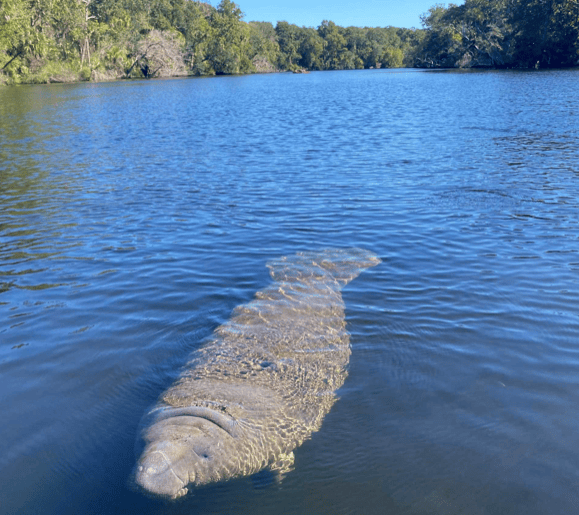
If you’re planning a trip to the Chassahowitzka River because you want to see manatees, you might be wondering when you should actually get on the water.
Is morning better?
Should you wait until the afternoon?
And what month gives you the best chance of seeing them?
There isn’t one perfect answer, because manatees are wild animals and their location can change from day to day. But there are a few things you can look at that can help you plan your trip.
What Month Is Best for Manatees?
If seeing manatees is your main goal, the cooler months are generally your best bet.
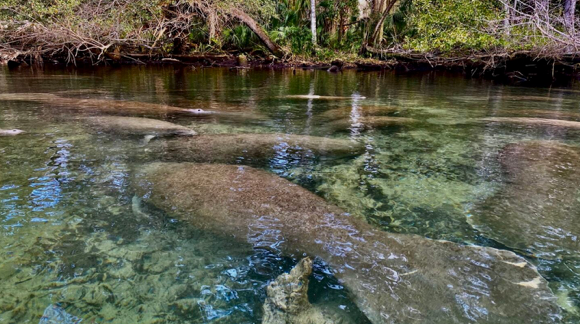
Florida manatees are sensitive to cold water. When temperatures drop, they move toward Florida’s natural springs because the spring water stays warmer than the surrounding waterways.
That makes December, January, February, and March particularly interesting months for manatee watching.
But there’s an important detail:
It’s not really the calendar that brings the manatees in. It’s the temperature.
A cold front can change where manatees spend their time much more than simply looking at the month on the calendar.
November: The Beginning of Manatee Season
November is when things start changing.
As the water gets cooler, manatees begin looking for warmer areas. The official winter manatee season begins November 15 in the Crystal River area.
If you’re visiting in November, don’t be surprised if the number of manatees you see changes from one day to the next.
A warm November day may have manatees spread out through the river system.
A colder day can bring more of them toward the springs.
December Through February: The Heart of Winter
These are some of the months many people have in mind when they picture a classic Florida manatee experience.
When the surrounding water gets cold, the warm spring water becomes extremely important to the manatees. The springs stay around 72–74 degrees, while manatees have difficulty tolerating water below about 68 degrees for extended periods.
That’s why a cold winter day can sometimes mean a lot more manatee activity around the springs.
If you’re planning specifically around manatees, these months are worth considering.
March: Don’t Count It Out
March is still part of the winter manatee season.
As temperatures start warming up, manatees can begin spreading out instead of concentrating around the springs as much.
But cold weather can still happen in March, and when it does, the springs can remain an important place for manatees.
So don’t assume March is automatically too late.
What Time of Day Is Best?
This is where things get a little more complicated.
There isn’t a specific time of day when manatees are guaranteed to appear.
Water temperature is usually more important than the clock.
On colder days, manatees may gather in warm spring areas to conserve energy.
That means the conditions on the day you’re visiting can matter more than whether you launch at 8 a.m. or 1 p.m.
Why Morning Can Still Be a Great Time
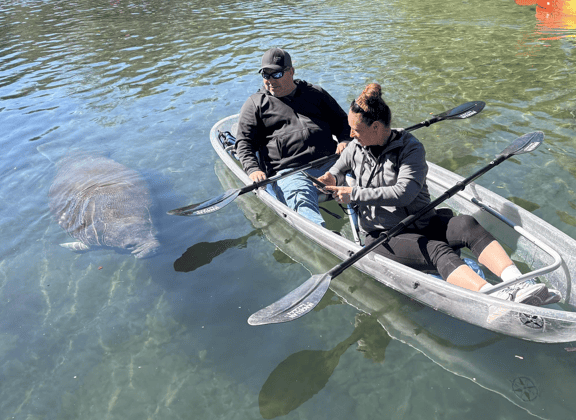
Even though there’s no magic morning hour, getting on the water earlier can have some advantages.
The river can be calmer, the light can be beautiful, and you’ll have more time to explore before the day gets busy.
And if you’ve got a cold morning after a front moved through, it can be a particularly interesting time to look around the warm spring areas.
Just remember that wildlife doesn’t operate on our schedule.
Sometimes you find a manatee right away.
Sometimes you have to paddle for a while.
That’s part of the experience.
What About the Afternoon?
Afternoon trips can be great too.
If the weather has been cold, the springs remain warm throughout the day, so manatees can still be found using those areas.
On the other hand, if you’ve had several warm days, you may find that manatees have spread out into other parts of the river and surrounding waterways.
That’s why having a guide who knows the river can be helpful. Instead of simply looking at the clock, you’re paying attention to what’s actually happening on the water that day.
The Best Combination: Cold Weather + Warm Springs
If you want to simplify the whole thing, think about it this way:
The colder the surrounding water, the more important the warm springs become.
That is what makes a cold winter day such an exciting time to be out looking for manatees.
You don’t necessarily need to wait for a specific month or specific hour.
Watch the weather.
A cold front moving through can be a much bigger deal than whether it’s January 10 or February 10.
And Remember — They’re Wild
Even under ideal conditions, there are no guarantees.
Manatees move around. They feed, rest, travel, and come and go from the springs.
You could visit on what looks like the perfect winter day and see only a few.
Another day, you might round a bend and find several manatees resting in the warm water.
That’s what makes seeing them in the wild different from visiting an aquarium or zoo.
You don’t know exactly what you’re going to find.
So, When Should You Book?
If seeing manatees is your priority, aim for the cooler months, especially December through February, and pay attention to the weather rather than focusing only on the calendar.
For the time of day, morning can be a great choice for the overall experience, but there isn’t a guaranteed “best hour” for manatees.
The biggest factor is the temperature.
Cold weather pushes manatees toward the warm springs. Warm weather gives them more places to go.
And that’s really the secret to planning a manatee trip on the Chassahowitzka:
Don’t just check the calendar. Check the weather.
Because when Florida gets cold, the manatees know exactly where they want to be.